At a glance

Status
UNESCO World Heritage Site since 1978 (cultural property)
Location
Opposite the Plateau, less than 3 km from Dakar port
Access
Ferry from the port's maritime terminal: about 20 minutes. A car-free island.
Recommended time
Half a day; a full day with lunch on the island
Visiting days
Tuesday to Sunday: House of Slaves and museums closed on Mondays
Best time
All year round; most comfortable in the dry season, November to June
For groups
Tickets, guide and, on request, a chartered ferry: we organise it
Why this place matters

Gorée Island

Gorée is an island barely a kilometre long, opposite Dakar's Plateau. From the 15th to the 19th century, the Portuguese, Dutch, English and French fought over it, and it was one of the major sites of the Atlantic slave trade on the African coast. UNESCO inscribed it in 1978, on the very first World Heritage List, as a reminder of human exploitation and a place of reconciliation.

Its architecture tells this contrast: merchants' houses, with their wooden balconies and shaded courtyards, stand beside the places where captives were held. The House of Slaves, built in the late 18th century, and its “door of no return” have become one of the most visited places of memory in Africa; Pope John Paul II in 1992 and President Barack Obama in 2013 paused there in reflection.

For a professional group, Gorée brings together what few places offer twenty minutes from a business district: a moment of reflection, a history lesson, and a car-free island explored on foot, between colourful lanes, shaded squares and a lookout over the Atlantic.
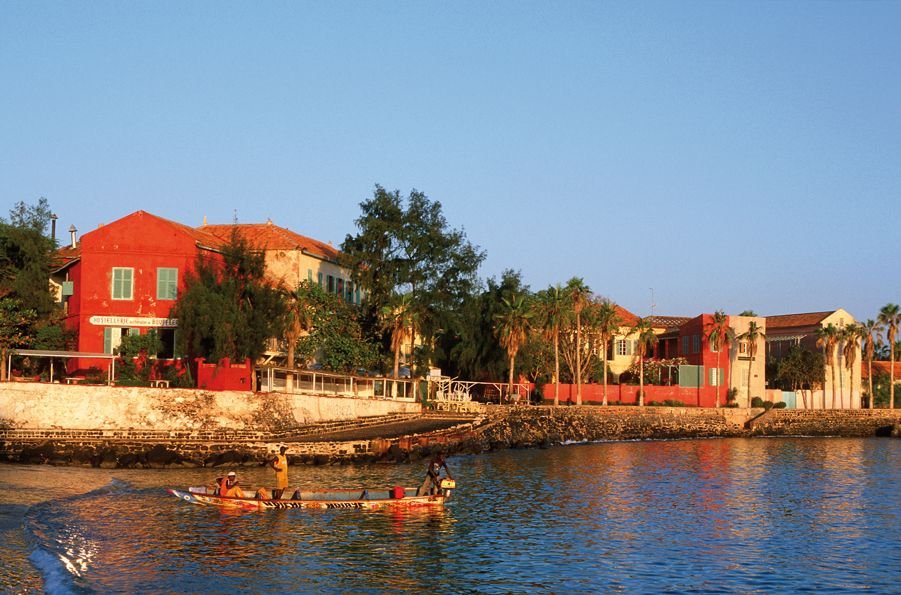
Gorée's waterfront, ochre and red houses on the bay
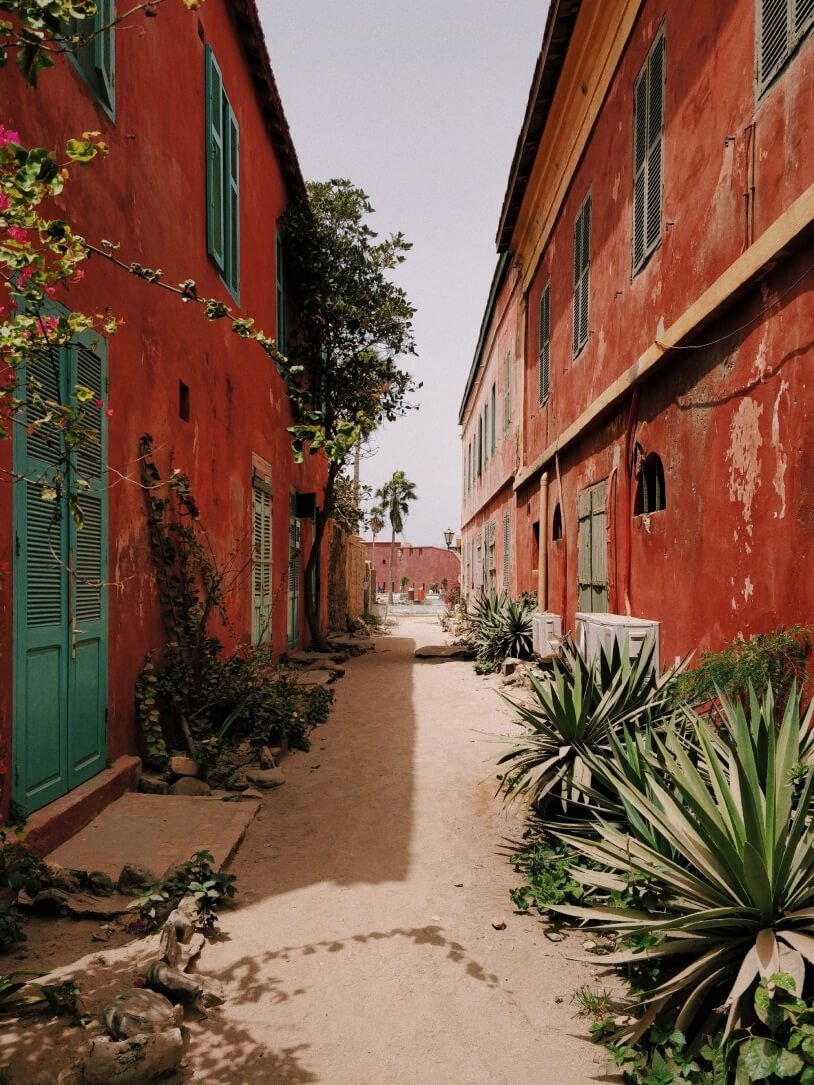
A sandy lane between two red houses with green shutters
Visiting

What to know before you go

Logistics, tips and site rules, checked on 12 October 2026.

1

The crossing

The ferry leaves from the maritime terminal at Dakar port, in the Plateau. Return tickets are bought at the counter before boarding; the fare depends on the category (nationals, residents, non-residents), around 5,000 to 6,000 CFA francs for a non-resident adult, plus a 500 CFA franc municipal tax. Regular departures from 6.15 am into the evening, less frequent on Sundays. Before leaving the island, check the time of the last return.

2

On the island

Gorée is explored on foot. The key stops: the House of Slaves, Fort d'Estrées and its history museum, Place de l'Europe, the Church of Saint Charles Borromeo, the mosque and the Castel, the plateau at the top of the island with its view of Dakar. Official guides wait on arrival: agree the fee and duration before you start.

3

Days and times

The House of Slaves and the museums are closed on Mondays. On Sundays and public holidays the island welcomes many Dakar families: for a group, choose a weekday. On Friday late mornings, return ferries are crowded.

4

Respecting the place

Gorée is a place of memory and an inhabited island. Dress modestly, keep voices low in the House of Slaves, and photograph people only with their consent. Drone filming requires prior authorisation. The island's artists and craftspeople live from their sales: buying at the agreed price is a simple way to contribute.

Groups and incentives

Formats for your group

Gorée adapts to your group's format, from a ten-person delegation to an incentive group of a hundred. The most requested formats:

Most requested

The delegation visit

A guided half-day in French or English: crossing, House of Slaves, Fort d'Estrées, the Castel. Tickets and guide booked in advance, back in Dakar for lunch or the afternoon session.

Lunch on the island

A table facing the bay after the visit: the format incentive groups prefer, leaving free time in the lanes and with the artists.

The private evening

For a private group, the ferry can be chartered outside regular sailings: sunset cocktails, dinner, a concert. Feasibility, permits and quotes on request.

The heritage journey

For diaspora delegations and heritage journeys: a visit with a historian, a moment of reflection, a ceremony following your protocol. We prepare it with you.

The small-group workshop

The Gorée Institute, a pan-African centre based on the island since 1992, hosts conferences and workshops. We check availability and capacity for your group.

Sample programmes

Three ways to fit it into your programme

Half dayAbout 4 hours
  1. Welcome at the maritime terminal and crossing
  2. Guided visit: House of Slaves, Fort d'Estrées, the Castel
  3. Free time in the lanes
  4. Return to Dakar
Full dayWith lunch on the island
  1. Morning crossing
  2. Guided visit
  3. Lunch facing the bay
  4. Free afternoon or meeting with an island artist
  5. Return in the late afternoon
EveningChartered ferry, on quotation
  1. Sunset crossing
  2. Cocktails on an island square
  3. Dinner
  4. Return by private ferry

Indicative timings, set for each group around ferry sailings and opening days.

One request

Organise a visit: Gorée Island

Describe your group once: dates, number of people, language, format. We pass your request to the right destination management companies, and their proposals come back to you.

  • A tracking reference for every request
  • Free of charge for the organiser
  • Times and fares reconfirmed for your date
Submit a request → Message us on WhatsApp

Form: reply within 72 working hours. WhatsApp: within the day, Monday to Saturday.

+221 75 552 05 82 · contact@teraltravel.com

Combine with

To round off the stay

Where to stay, who to work with

Listed venues and suppliers

Gorée has a few small guesthouses: ideal for a night apart, not for a group. Groups stay in the Plateau, a few minutes from the maritime terminal, or on the Corniche.

In the Plateau, near the maritime terminal

Destination management companies for the visit

Tickets, guides, transfers, lunches and evenings on the island.

Details on each profile. “Verified” marks a profile confirmed by the business.

Frequently asked questions

Before you plan the visit

Do I need to book the ferry?

Not if you travel alone: tickets are bought at the counter before departure. For a group, it is best to arrange tickets and a guide in advance; the ferry can also be chartered.

How much time should I allow?

At least three and a half hours, crossings included. Half a day is comfortable; allow a full day with lunch on the island.

Can I visit on a Monday?

The island, yes; but the House of Slaves and the museums are closed on Mondays. For a full programme, choose another day.

Can we hold a dinner or reception on the island?

Yes, for a private group, subject to permits and chartering a ferry for the evening return. We assess feasibility and pass your request to the right providers.

Is the visit accessible for people with reduced mobility?

Only partly: the island is car-free, the lanes are sandy and the House of Slaves has stairs and steps. Tell us about any needs and we will adapt the route.

Do we need a guide?

It is strongly recommended: a guide brings the place to life. Official guides wait on arrival; for a group, we book a French- or English-speaking guide in advance.

Do I need ID?

Yes, ID may be requested when buying tickets: keep it with you. For an international group, bring passports.

✔ Page checked on 12 October 2026. Sources: UNESCO World Heritage Centre, “Island of Gorée”. Ferry and museum times and fares taken from sources published by the operator and tourist information sites; they change and are reconfirmed for each request.

Organise a visit