Getting there
Kédougou, the regional capital, is more than ten hours by road from Dakar: we advise a night in Tambacounda, or a stop in Niokolo-Koba. From Kédougou, the villages are reached by tracks, then on foot.
On the south-eastern hills, on the border with Guinea, the Bassari, Bedik and Fula peoples have shaped landscapes of hilltop villages, fields and sacred places. Inscribed on the World Heritage List in 2012, Bassari Country is discovered on foot, in small groups, with guides from the region.
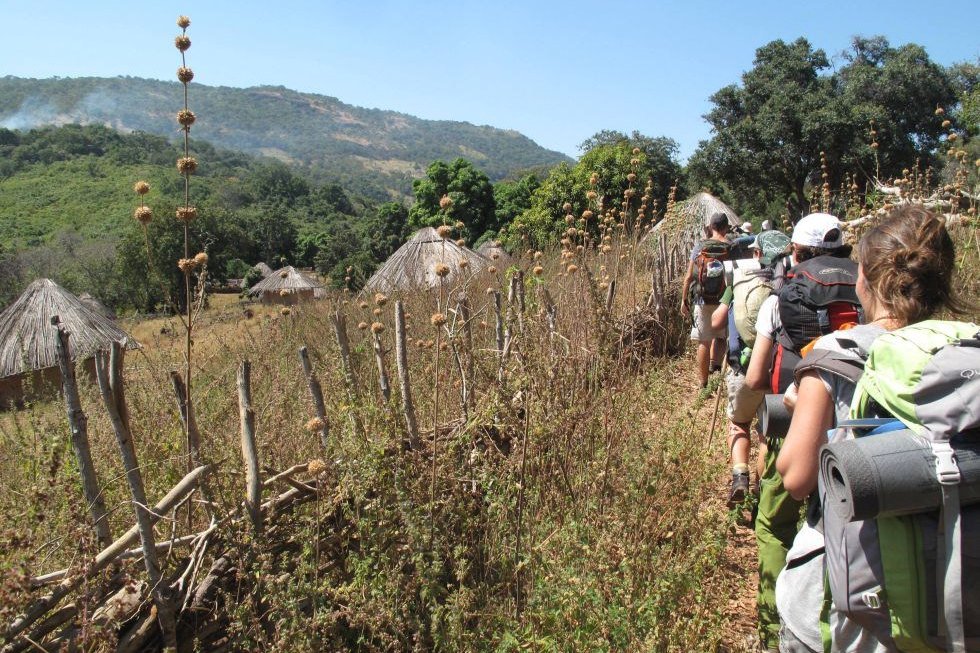
Bassari Country is a cultural landscape: what UNESCO protects here is not a monument but a way of living in the mountains. On the foothills of the Fouta Djallon, three peoples have adapted their villages, crops and rituals to difficult terrain, in three distinct areas: the Bassari around Salémata, the Bedik around Bandafassi, the Fula around Dindéfelo.
The Bedik villages, perched on the heights, with their round thatched huts, are among the most striking sights of Eastern Senegal. Among the Bassari, initiation ceremonies and mask outings still mark the year; among the Fula of the Dindéfelo plateau, herding and fields shape the landscape.
This heritage is alive, which is what makes it fragile. Visit in small groups, with a guide from the region, respecting village customs: ask before entering or taking photos, never attend a ceremony without an invitation, contribute according to local practice.
Logistics, tips and site rules, checked on 13 October 2026.
Kédougou, the regional capital, is more than ten hours by road from Dakar: we advise a night in Tambacounda, or a stop in Niokolo-Koba. From Kédougou, the villages are reached by tracks, then on foot.
Iwol and the Bedik villages near Bandafassi, Ethiolo and the Bassari villages around Salémata, Dindéfelo and the Fula plateau: each area needs at least a day. The climbs to the hilltop villages are on foot, sometimes on steep paths.
The major ceremonies, initiations and mask outings, follow each community's own calendar. They are not staged for visitors: you attend only by invitation, with a guide from the region.
Greet the village chief, ask before taking photos, dress simply, contribute according to local practice: the guide will show you how. Ask them to show their official guide card.
| J | F | M | A | M | J | J | A | S | O | N | D | |
|---|---|---|---|---|---|---|---|---|---|---|---|---|
| Bassari Country | ||||||||||||
| Niokolo-Koba |
From March to May it is very hot; from June to October the rains make the tracks difficult. We reconfirm access for each date.
Bassari Country is visited in small groups, at walking pace. The most requested formats:
Five to six days: Niokolo-Koba, the Bedik and Bassari villages, the Dindéfelo waterfall. The complete trip for lovers of hiking and encounters.
Three to four days of walking with a local guide, nights in village camps: for walkers used to the heat.
Anthropology, cultural landscapes, managing a World Heritage property: programmes for universities and associations, with local speakers.
Landscapes, dry-season light, village architecture: a photography trip needs a guide and the residents' consent for every portrait.
A few days in the hills, away from screens, for a small team. Limited connectivity: plan for it.
Indicative programmes, adjusted to the season, track conditions and the group's fitness.
Describe your group once: dates, number of people, language, format. We pass your request to the right destination management companies, and their proposals come back to you.
Form: reply within 72 working hours. WhatsApp: within the day, Monday to Saturday.
+221 75 552 05 82 · contact@teraltravel.com
In Kédougou and in the villages, as examples:
Accommodation listed as examples, with no guarantee of availability: we suggest what suits your group and your dates. “Verified” marks a profile confirmed by the agency.
November to February: bearable temperatures and passable tracks. March to May is very hot; the rainy season makes the tracks difficult.
Reasonable fitness is enough for village visits; the climbs to the hilltop villages are short but steep. For a multi-day hike, you need to be used to walking in the heat.
Only by invitation. Ceremonies follow the communities' calendar and are not staged for visitors. Your guide will tell you whether a visit is possible, and on what terms.
Always with their consent, asked by the guide. Some places and some ceremonies may not be photographed.
By road, in one or two stages from Dakar. We arrange the group's transport, with a stop in Tambacounda or Niokolo-Koba.
Yes, a guide from the region: they know the villages, the customs and the paths. Ask to see their official guide card.
✔ Page checked on 13 October 2026. Sources: UNESCO World Heritage Centre, “Bassari Country: Bassari, Fula and Bedik Cultural Landscapes”. Access, times and fees taken from sources published by the site managers and tourist information sites; they change and are reconfirmed for each request.